Lizard Project Days 10 & 11: Animals

We have now caught, tagged and released 572 lizards on this trip into the field.  We have already shared with you guys how we search for lizards, how we catch lizards, how we measure lizards and how we learn about evolution by studying lizards.  However, this post is not about lizards.  This post is about all of the other amazing animals that we get to see when we are out working on the islands.

 Manatee. Photo courtesy of shutterstock.com.
Manatees: This morning while we were paddling out we heard loud snorting and blowing. A huge tail then appeared appeared out of the water and two, thousand pound manatees rolled onto their sides and looked at us. We think that they were in the act of mating. They looked at us and continued swim slowly nearby, while they rubbed against each other.  They stayed close to us for about a minute until a power boat came close to them and scared them off.
The lizard project team gets a close up view of manatee mating on our morning commute.

Eastern Glass Lizard on Little Island.  How many of our lizards has he eaten?
Eastern Glass Lizard: Early in the trip we found an Island Glass Lizard, a seldom seen species of legless lizard swimming in the estuary. We thought we were lucky to see a legless lizard period, but yesterday we found another species of legless lizard on one of our islands (I wonder how many of our study lizards he has eaten?). This one was the Eastern Glass Lizard.  When we were releasing him, we accidentally caused him to eject his tail. We were sad that this happened, because it will probably take this lizard a while to regrow such a big tail.  They have the ability to eject their tail to escape from a predator.  When the tail is detached it wiggles like crazy to keep the predator distracted while the lizard escapes.  We filmed it and you can watch by clicking on the video.

Yellow Rat Snake: We found this critter on the mainland, but we have seen these on our islands before.  Like their name says, they like to eat rats and small mammals.  They also probably like to eat our lizards when they are small.  We have not seen any of these out on our islands this trip, but we have seen evidence that they are there.  We found two large skins that have recently been shed out on island L.  Andrew, the resident snake expert on our team, determined that they were skins from two very large (almost 5 feet long!) yellow rat snakes.  If you are
interested in learning about how Andrew can identify a snake from it's shed skin, read his latest blog post on his blog SnakesAreLong.blogspot.com http://snakesarelong.blogspot.com/2012/04/identifying-snake-sheds.html#comment-form


Great Blue Heron: These big beautiful birds are really common on the estuary.  Almost every morning when we put the kayaks in the water.  These guys are sitting on the dock with the fisherman.  Watch this short video of one wading along the shore of Island M.


Still can't get enough Lizard Project.  Check out Tim Mitchell's post on timsfertileturtles.blogspot.com about the strange language of lizard catching.

Tim's Fertile Turtles: Lizard Project- Day 10. Lizard Lingo!: We are on the cutting edge of evolutionary biology, but also on the cutting edge of developing new vocabulary.  After spending days and days trying to catch lizards, we have developed some new vocab words. 

Lizard Project Days 8 and 9: A field day in the life of an evolutionary biologist.


As a biology teacher it seems to me that many kids who would make really great biologists (Maybe you are one of those kids!), don’t become biologist because they don’t  know any biologists personally and can’t picture exactly what it is they would do as a biologist.  Here at WideWorldScience we love what we do and we want to share it with you.  While it is true that there is a lot of time spent back at the lab, analyzing data, teaching classes, planning experiments and preparing for field expeditions, all of us love to get out and do science in the wild.  We really do love working with our friends outside, paddling kayaks, looking for wildlife, climbing trees and chasing lizards. We live for these field trips!  Here is a typical field day in the life of a biologist:

Dan and Andrew with our rental truck and kayak trailer.
6:30 Wake up- Four of us are packed into the tiny bunkhouse room at the Guano Tolomato Matanzas Estuarine Research Reserve.  It is small, but it has air conditioning, running water, electricity and an internet connection, so we are glad to have it.  Many times we camp in tents while we are working in the field.

6:45 Breakfast- cereal, milk and bananas


.7:15 Packing the gear- We pack up all of our gear into the truck for the day.  This includes, lizard nooses, lizard bags, drinking water, dry shoes, sunscreen, cameras, animal coolers, lizard noose repair kit, duct tape (you always need duct tape), life jackets, kayaks, paddles and of course lunch (usually pb&j sandwiches, apples and granola bars).

8:00 Drive 3 miles to the boat launch- This is where we put the kayaks in the water.  There are lots of fisherman that put their boats in the estuary here.  It is a busy place.
The commute to the office.

8:30 Paddle out to the islands- This is one of my favorite parts of the day.  It takes about 10 minutes to paddle to Island M, our closest island, and about 45 minutes to paddle to Island F, the furthest island.  We often have dolphins swim near us while we paddle.

9:00 We land on an island.  This requires us to wade through the shallow water.  Since Tim cut his foot on an oyster shell two days ago, we have to help him keep his feet dry. See this video.
http://bit.ly/Hp77FL


This lizard has already been captured by us.


9:15- 12:15 We hunt for lizards on the island.  We just walk around carefully looking for lizards in the trees.  When we find one we then try to noose it.  We put numbers on those that we have already caught so we don’t catch them again accidentally.


12:15- 12:45 We take a break to eat our lunch.

1:00- 4:00 We move to a second island and catch lizards there.
Looking for lizards in all the wrong places.

4:15 We paddle the kayaks back to the boat launch and load them back up on the trailer to drive back to the field station.

5:00 Cold Showers-  Sometimes we even stop for ice cream on the way home.

5:00 to 6:30 Blogging, Tweeting, Cooking Dinner and updates data notebooks


Processing lizards.
Science is fun, but it is hard work. Rest up there are still more lizards out there!
6:30-10:00 Processing Lizards.  This is what we call it when we measure, weigh, mark and take tissue samples from the lizards.

10:30 Sleep time!  We are really tired by this point in the day!

Lizard Project 7: Little by little, making progress towards discovery.

Each day that we have been working on The Lizard Project has been different, but what all of the days have in common is that we are making progress towards our goal of gathering enough data to make conclusions on whether or not or hypotheses are supported.  All of our data collection brings us closer to being able to say something, supported by evidence, about how sex ratios effect the evolution of animal populations.

Since we caught so many lizards yesterday (135! Wow!) we had a huge backlog of lizard measuring, weighing and marking to do. To get everything done we split up the team.  Dan stayed back at the field station to do the measuring, while Andrew, Tim and I paddled out to Islands M and K. We worked for 6 hours total, but only caught 47 lizards today.  Many of the lizards we spotted today were already marked.  That is a good sign because it means we are already getting close to having all of the animals captured, marked and measured on a couple of our islands. We also had a great Skype conversation  with Erin Nash's Zoology class. The Benton High School students had great questions for us and the whole thing was a lot of fun.


Oyster beds are sharp - ouch!
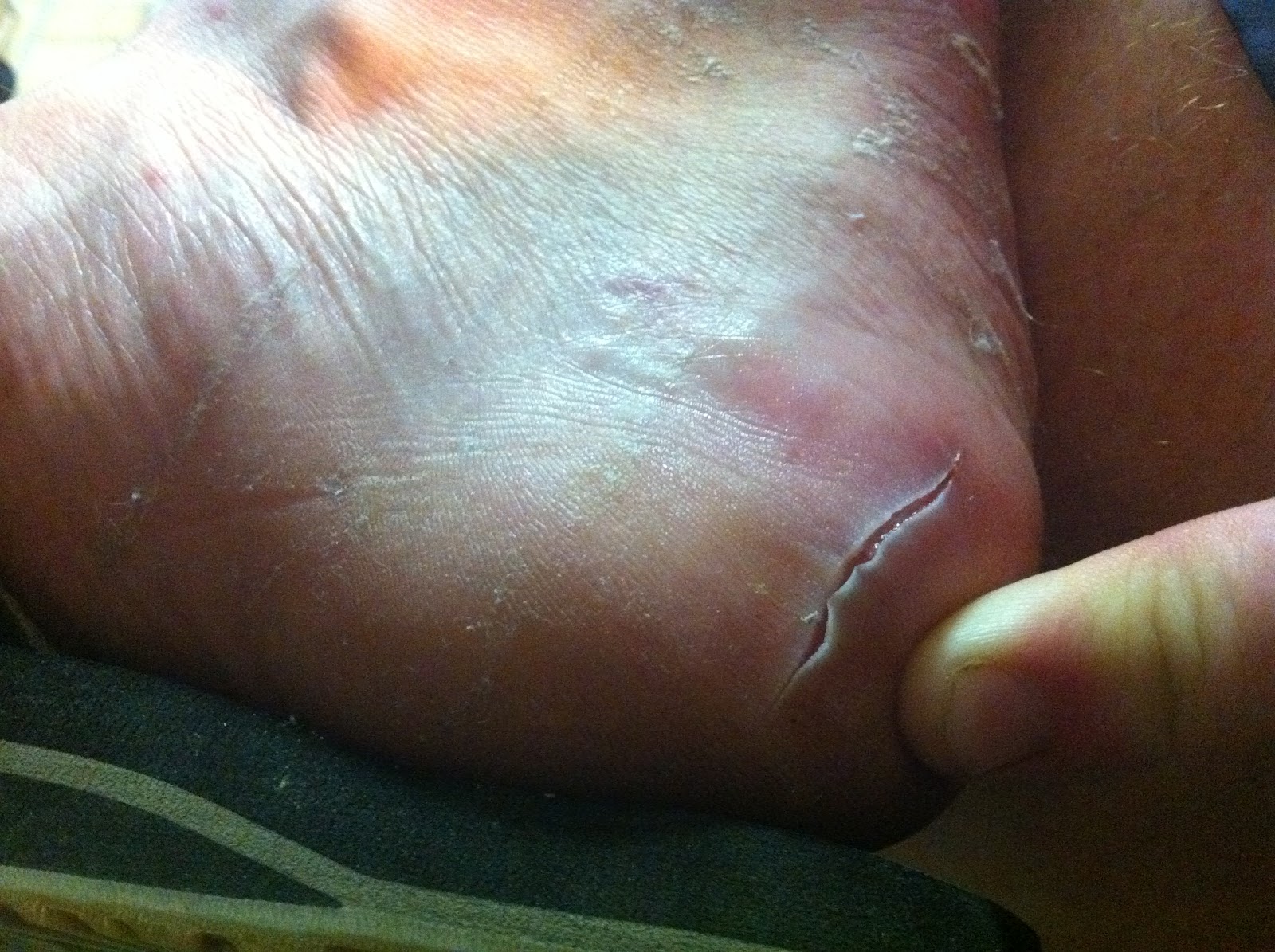
While we are down hear working the pace can be grueling at times.  The work on the islands is often very hot and we often work late into the night measuring  lizards.  Crawling around in the trees and bushes chasing after lizards leaves us scratched up and bruised.  Yesterday Tim got even more scratched up while getting back into his kayak.  He accidentally stepped on a razor sharp oyster shell and cut his foot.


Throughout all of the work that we do with the lizards, one of the greatest perks of our job is working in such a beautiful setting with so many cool animals all around us.  The insect communities on the islands are amazing and would be worthy of an entire research project on their own.  Here are some of my favorites:
Bold jumping spider

Regal jumping spider
American grass mantis
Spiny-backed orbweaver spider

Lizard Project Day 6- Lots of Lizards!
(Reposted from Timsfertileturtles.blogspot.com)

 The cool, rainy day we had yesterday made it slow for both lizards and lizard-catchers alike.  When we awoke this morning to clear skies, we knew that the lizards would be eager to be out.  We visited two islands today, and hunted the lizards like mad.  And we did very well.  We caught 135 lizards today, including this one that was eating a grasshopper!  That is A LOT of lizards.  As our goal is to catch as many of the lizards present on each island as we can, we feel very good about days like this.  What we don't look forward to, is processing 135 lizards tonight.  We "process" lizards, be measuring, weighing, photographing, and marking each lizard back in our field station (aka bunkhouse).  It takes about 3 minutes to process each lizard, so you can do the math (and in case you can't do math, that adds up to about 7 hours of solid processing).


We also noticed this pair of Green Anoles mating as we were searching for our study species, the Brown Anole.  So why did these two end up together?  That is part of the question us biologists are interested in.  The were both able to survive this long, so that is a prerequisite to successful mating.  Did this male have fight off other males to keep a high quality territory? Did he attract this female with a flashy dewlap display?  Was it just a chance encounter, and she would have been willing to mate with any male she crossed paths with?  These are all questions we don't know the answers too, but our work with the brown anoles will give us some insights into at least that species. Notice that he is biting the back of her neck during their mating! Interesting.

On a side note, I had the most terrifying moment of my life yesterday. After the rains, I went for a run and then swim in the ocean.  As I was swimming, I noticed two HUGE shark fins cruising towards me.  I turned and swam/ran/stumbled my way back onto the beach.  They came within 10 meters of me. Their dorsal fins were about 18-24 inches tall, and was about 6 feet in front of their tails, which was also breaking the surface.  This means these sharks were probably about 12 feet long.  I never saw the heads, just the fins and tail, so I don't know what species they were,  but based of their size, I  certainly could have been on the menu. Turns out Florida has had the most shark attacks of any state in history, according to the Florida Museum of Natural History...  I won't be swimming anytime soon.

Lizard Project Days 4 & 5: No two days are ever the same in field biology.

We are already into day 5 of The Lizard Project.  Our team is settling in to our daily routine of working in the field, but when it comes to science in the field, nothing is ever really routine.

Yesterday, was a really full day.  We left at 6:00 am to get our rental pickup truck.  This is great for us, because we can now pull a trailer with all four of our kayaks and carry all of our gear in the back, all in one trip.
Tim caught a bumble bee with a lizard noose.  No way!
We did four Skype video calls with classrooms. The first call was to Adam Taylor's class in Nashville, TN at Overton High School.  They asked lots of great questions and Mr. Taylor even ran a live webcast of our conversation!  We then talked to 3 of Mr. Will Reed's classes at Kelly High School in Chicago.  The first conversation actually took place from the water while we were paddling the kayaks out to the islands!  We had  hot sunny weather and it was a great day for the lizards. We caught 76.  Tim also became a legend among our crew when he caught a bumble-bee out of mid air with his lizard noose.  If you don't understand why that is amazing, check out this quick video of a lizard noose in action. http://bit.ly/HszCIG Now picture using that to catch a bumble bee in mid-air.


Threatening Sky
Today mother nature dealt us a completely different day to work with.  We got out to the islands around 9:00am, but it was cool and windy with storm clouds threatening.  We worked at catching lizards for 4 hours total on three different islands and only caught 6 lizards. Lizards are ectothermic or what you might know as cold-blooded. Because they are ecothermic, they can't move very fast when they are cool.  So on days when it is not sunny and hot, they spend most of their time hiding inside of trees or underneath palm fronds.  They are almost impossible to find under these conditions and we only found a few. We decided that any more time spent searching for hidden lizards was not worth it,  the sky grew more threatening and we spotted lightning. That was our cue to head for home.  We hurried to load up our gear in the boats and paddle for the dock.  We  paddled with a huge wind at our backs and loaded the kayaks onto the trailer just as the rain and hail hit.  No we are back at the field station catching up on data processing and waiting out the rain.

Lizard Project Day 3: The little things.


One of the best parts about doing research in the field is the little unexpected things that you get to see because you are spending time looking at nature so carefully. Today we got a lot of work done.  We measured dewlaps in the morning for 20 lizards, paddled out to islands M and K where we caught 76 more lizards, took a break for dinner and then measured, weighed and marked our catch.  We did a lot of work, but the things I will remember about today were the little things that happened in between the work.

While paddling between islands in our kayaks, we saw a snake swimming out in the middle of the estuary.  We paddled over to try and catch it.  Once Tim had it in hand, we realized that it wasn't a snake at all.  It was a eastern glass lizard, a species of lizard without legs.  It is a great example of convergent evolution.  They look like snakes, but they evolved this body completely independently.  None of us had ever seen one in real life (aka: the wild) before.

In the middle of working on the islands, we heard loud snorting and slapping noises.  In the estuary, we saw several dolphins swimming in the shallows.  Quite a site to see for us, since we all live in the midwest, nowhere near an ocean.


The other fun part of the day occurred as we chased down a large male anole.  Aaron spotted the anole in the tree, and it was eating the lunch of a fat spider.  Tim then tried to catch the anole with his lizard noose but accidentally caught the spider instead. The seconds later, Dan caught the lizard.


We are looking forward to more of the little things.  -Tim and Aaron

If you want to learn about evolution with lizards, you have to go to where the wild lizards live. Join us as The Lizard Project goes to the islands later this week!


Do you ever wonder how scientists learn about evolution? 
Follow us this week as Dan, Tim, Andrew and I will head down to the Guana Tolomato Matanzas National Estuarine Research Reserve and Tomoka State Park in Florida to continue an exciting experiment we began last year.  We are really glad to have you follow along as we do science and we are looking forward to answering your questions on line.  Let me tell you a bit about what we will be doing down there on our islands.  You can also follow on twitter @mr_reedy (#lizardproject) or on youngzine.com 

What questions are you trying to answer with your experiment?
All science starts with a question and the big question we are asking, “Why is there a 50/50 sex ratio in so many animal populations?” If you really think about it, this doesn’t necessarily make the most sense for an animal population.  Since a population can often grow faster with many females and few males, why is it that we so often find males and females in almost equal numbers?


When thinking about this we also wondered, “If the sex ratio, became really biased towards one sex or the other, how quickly would natural selection push things back to 50/50?

And,” In a world that is mostly female, would males have a better chance of surviving and reproducing? What about in a world that is mostly male?

What are your hypotheses?
The leading theory on the 50/50 sex ratio is that when the ratio gets out of balance, natural selection pushes it back towards 50/50.  For example when there are many male lizards all fighting for territory in the trees, you have a better chance of surviving if you are a female.  Therefore in a world with more males, a balance will quickly be restored as many males die before reproducing and many females survive to adulthood.  This is our general hypothesis.

We also think that in situations with biased sex ratios, natural selection will favor traits differently. We think that on an island with many males and few females,  the biggest males will be more likely to survive.  However, we think that on an island with few males and many females, the smallest males will have a better chance of survival and reproduction, because it will be easy for nearly all males to find a territory and mate. In this case, the large body size may be a waste of energy and be more noticeable to predators.

How are you testing these ideas?
With an experiment of course! Many people wrongly think that questions about evolution can’t be tested in the wild because evolution is a slow process.  However, evolution can be seen in the wild and measured if we look carefully. 

Since our question is big, so is our lab. Instead of testing animals in laboratory cages, we use entire islands as our animal enclosures for the experiments!

To test our hypotheses, we set up 9 experimental islands that did not have brown anole lizards living on them. On five of the islands we released a 66% male population and on the other four islands we released a 66% female population.  Before we introduced these populations to the islands, we took DNA samples and careful measurements from each of our founder lizards.  Now we will be able to check each year to see which individual lizards were most and least successful at producing baby lizards.  We will also continue to measure the future generations to see how natural selection is working to shape the evolution of these populations on the different islands.  We may be able to see evolution in action…but first we have to catch, measure, and take DNA samples from nearly every lizard on our nine islands.  We are going to be busy!